
Closing Circle Energizers & Activities
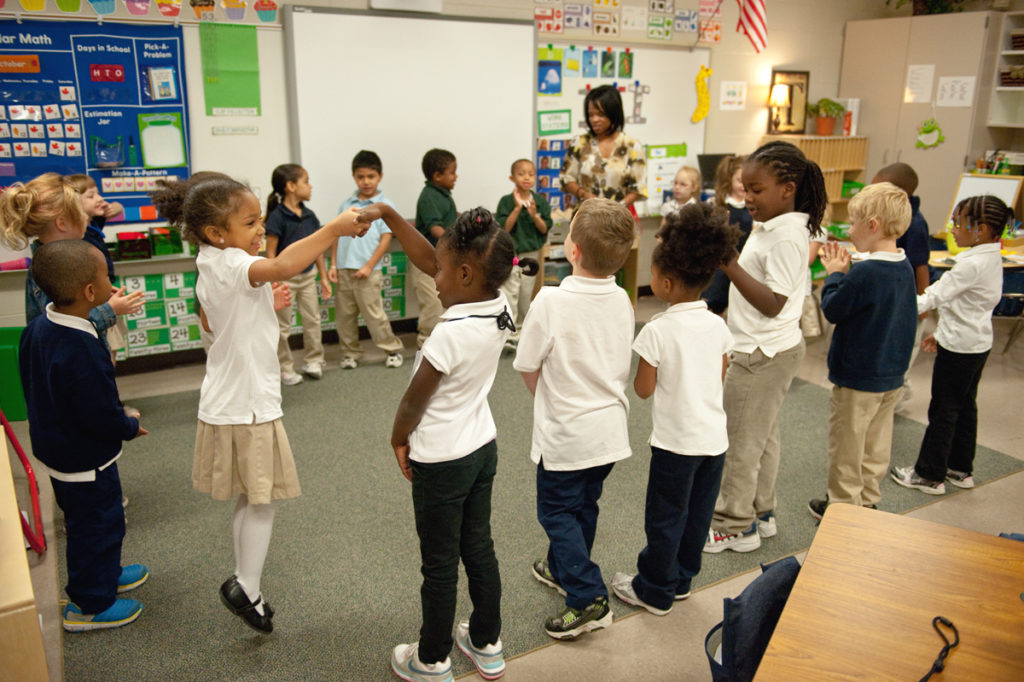
Some students, especially in the early grades, may appear fidgety or restless by the end of Morning Meeting. This response is developmentally typical, particularly for young children who need frequent movement and tire quickly. While outdoor breaks can be helpful, Morning Meeting itself offers opportunities to incorporate physical activity and structured transitions that help students stay engaged and ready for learning throughout the day.
Rather than moving recess earlier, you can adjust how Morning Meeting is paced and designed so it continues to set a positive tone while supporting students’ physical and self regulation needs. Effective teaching requires noticing how a group is responding and adjusting strategies accordingly. Some groups need time to build the stamina required to participate in all components of Morning Meeting. Shorten or adapt meetings temporarily while continuing to stretch students’ ability to focus, listen, and participate.
Here is how you can use each of the four components of Morning Meeting to support restless students:
If it’s hard for children to go around the circle and do a handshake greeting or other quiet greeting without hesitating or dragging it out, try more active and participatory greetings most days. Some groups do much better with chants and gesture-filled songs, singing out each other’s names and acting out playful motions. Here are just two such greetings:
The whole class repeats the following chant until each child in the circle gets a chance to say his/her name.
Hickety-Pickety Bumble Bee.
Won’t you say your name for me.
_______________ (Child being greeted says his/her name.)
Let’s all say it. (Group says the child’s name.)
Let’s clap it, too. (Group says name and claps out the syllables.)
Let’s whisper it. (Group whispers the name.)
Let’s turn off our voices and clap it. (Group claps out the syllables without speaking.)
This greeting can be sung or chanted. When a child’s name is called, the child comes into the middle of the circle and does a movement of her/his own choosing—for example, a bow, curtsy, wave, dance, wiggle, etc. During the last line of the song, the child moves back to her/his place in the circle. Another child’s name is called, and so on around the circle.
One, two, three, four! Come on, ____________, hit the floor.
We’re so glad you’re here today.
Hurray, hurray, hurray!
Sharing is a wonderful way for children to get to know each other, to show interest and to develop the vocabulary for noticing and conversation. But doing this well takes practice for both speakers and audience. Here are some ways to help enliven this part of the meeting and pace it to the needs of the group:
Try to choose Morning Meeting activities based on the needs and day-to-day moods of the group. Activities that involve pantomime and motion can help harness and channel restless energy. Most students love fast-paced games that involve quick ups and downs and ins and outs, but also require them to pay attention. Here are two activities that fit this description:
Everyone sings the song “My Bonny Lies Over the Ocean.” Whenever students sing words beginning with a “b,” they alternate between sitting and standing. For example: “My Bonny (stand) lies over the ocean. My Bonny (sit) lies over the sea . . .”
The words to the song are:
My Bonny lies over the ocean.
” ” the sea.
” ” the ocean,
So bring back my Bonny to me.
Bring back, bring back,
Oh bring back my Bonny to me, to me.
Bring back, bring back,
Oh bring back my Bonny to me.
One student begins the game by pantomiming some simple action in the center of the circle, such as brushing his/her hair. The next student in the circle approaches the hair-brusher and asks, “What are you doing?” The hair-brusher responds by saying something completely different, such as “I’m washing the floor.” The student who asked now pretends to wash the floor. The next student then comes to ask the floor-washer, “What are you doing?” This goes on until everyone in the circle has had a chance to pantomime an action.
Closing the meeting with the morning message gives students a way to settle and refocus. To be of real interest, the message has to change daily and be specific to the day and class. It also has to be read in a way that’s suitable for the age, attention span, and energy level of the particular group. After a rousing Morning Meeting activity, one class of first graders quickly returned to the chart when the teacher covered a single word and asked, “Who thinks they know what word I’m covering? I’ll give you a hint. It is about something we will do today.” Eyes became centered, hands went up, and the day was at hand.
You can read more about Morning Meeting, including tips and ideas, in our comprehensive library of free articles:
For a deeper dive into the practice, check out one of our books:
Ruth Sidney Charney is the author of Teaching Children to Care.