
Closing Circle Energizers & Activities
The high school years are a time of rapid change. Teenagers are developing new interests, forming strong opinions, seeking independence, and navigating a wide range of academic and social challenges. Much of this can be explained by what is happening inside the adolescent brain.
The adolescent brain is still under construction. Two essential regions are being rewired:
All parts of the brain are interconnected. Generally, information travels from the posterior regions to the anterior regions—from the back to the front. The limbic system, located toward the back, receives information from the brain stem before passing it along to the frontal lobes. Once there, the prefrontal cortex can use the information to make more thoughtful, deliberate decisions (in contrast to the limbic system’s instinctive emotional response).
The limbic system develops in early adolescence, while the frontal lobes mature later and continue developing into early adulthood. This difference is often compared to a car where the limbic system is the gas pedal and the frontal lobes are the steering wheel and brakes. Because the gas pedal develops first, the brain can pick up speed without being fully able to steer or slow down. This dynamic helps explain many adolescent behaviors, such as risk-taking, mood swings, and difficulty sustaining focus or following through on tasks.
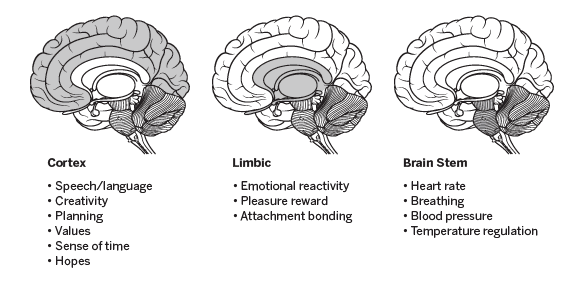
The brain stem, which manages vital functions like heart rate, breathing, and temperature regulation, can interrupt the brain’s flow of information if physical needs are unmet. Similarly, an emotionally dysregulated limbic system can limit access to the frontal lobes. For students to engage in higher-order thinking, they first need to feel physically safe and emotionally steady.
This uneven brain growth helps explain why teenagers sometimes struggle with focus, organization, and self-control. It also underscores the importance of teaching and reinforcing both social-emotional and academic skills during high school.
Here are a few ways you can support adolescent brain development by meeting students’ cognitive, social, and emotional needs:
When high school educators understand the adolescent brain and teach in ways that support its development, students are more likely to feel motivated, capable, and connected. They begin to see themselves not just as learners, but as contributors to their school, their community, and their future.